Brown Patch vs Dollar Spot - How to Tell the Difference
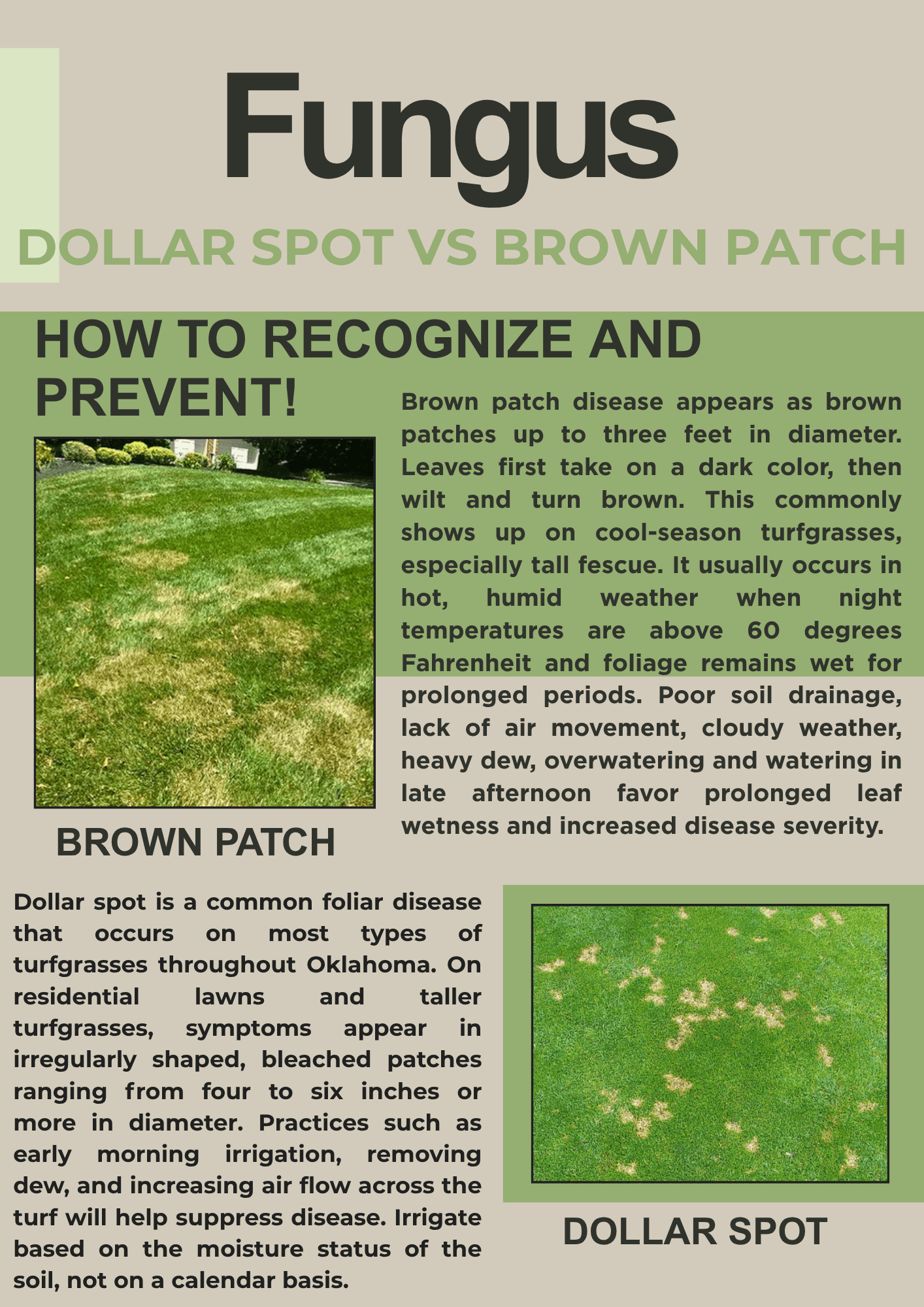
If your lawn is showing brown or bleached patches right now, fungus is likely the culprit. Two of the most common offenders this time of year are brown patch and dollar spot - and knowing which one you're dealing with makes a big difference in how you treat it.
Brown patch is especially hard on tall fescue lawns. It shows up as large circular brown areas that can reach up to three feet wide. The grass blades darken first, then wilt and go brown. Hot nights above 60 degrees, heavy dew, poor drainage, and late-afternoon watering all create the perfect conditions for it to spread fast.
Dollar spot is a different animal. Instead of large circles, you'll see smaller bleached patches - usually four to six inches across - scattered across the turf in irregular patterns. It hits most grass types and is common throughout Oklahoma. Watering too frequently and at the wrong time of day tends to make it worse.
The good news is that both diseases respond well to better watering habits. Early morning irrigation, improving air flow across the turf, and watering based on actual soil moisture - not a fixed schedule - go a long way toward suppressing both. Cutting back on late-afternoon watering alone can make a noticeable difference.
Fungal issues can look similar on the surface, but treating the wrong one wastes time and money. If you're not sure what's going on in your lawn, getting a proper diagnosis first is always the right move.