Thicken Bermuda & Fescue Lawns with Aeration & Seed
Got Bermuda and fescue in the same yard? Here’s how we thicken a thinning mixed lawn with aeration, fall overseeding, and a smart fertilization schedule.
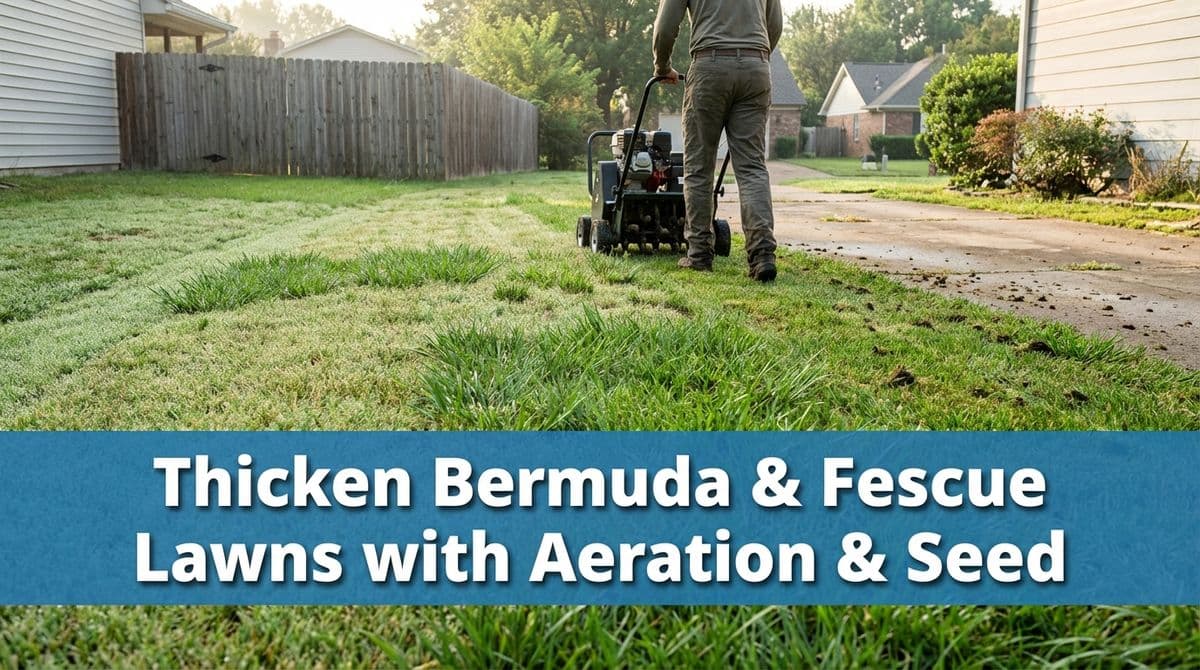
When Bermuda and Fescue Share a Yard
We recently got a call from a homeowner — let’s call him Josh — who had a very familiar problem. His lawn is a mix of Bermuda and fescue, with lots of trees, a fence line, and even a natural gas easement in the back. Over the last few years, some trees had been damaged or removed, the shade patterns changed, and now his once-thick fescue was starting to thin out.
Josh told us he wasn’t seeing many weeds, but the grass just didn’t look as full or as green as his neighbor’s lawn across the street (who happens to be on our program). He suspected he needed aeration, overseeding, and a consistent fertilization plan — he just wasn’t sure when and how to do it, especially with both Bermuda and fescue in the same yard.
We walked him through exactly how we approach a mixed-turf lawn like his. If your yard sounds similar, here’s how we thicken a thinning Bermuda/fescue lawn with aeration, overseeding, and proper fertilization.
Step 1: Understand Your Bermuda–Fescue Mix
The first thing we do on calls like Josh’s is talk through where each grass type actually lives. In his case, Bermuda dominated the sunnier front yard and the easement area, while fescue covered the shadier parts of the front and much of the back around the trees.
We always explain it this way:
- Bermuda loves full sun, heat, and rebounds aggressively in summer.
- Fescue prefers cooler temps and partial shade, and it thins out more easily under stress.
When we build a plan, we treat those as two different zones under one roof. Our combo program lets us feed and protect each grass type based on where it actually grows, rather than treating the whole yard as if it were just one turf species.
Step 2: Aeration to Open Up the Soil
Josh mentioned one area where the soil suddenly felt soft and spongy, and he was worried about past grub damage. Whether soil is compacted from foot traffic or weakened from insects, we almost always recommend core aeration as the first step to thickening a thinning lawn.
In our program, we offer aeration in the spring and again with overseeding in the fall for fescue areas. Here’s what we’re looking to accomplish:
- Relieve compaction so roots can spread deeper.
- Improve water and nutrient movement into the root zone.
- Create pockets for seed to make good soil contact in the fall.
Homeowner tip: After we aerate, we ask our customers to water lightly for several days if rainfall is lacking. You don’t need to flood the yard — just keep the soil evenly moist so the cores break down and the roots start exploring those new channels.
Step 3: Overseeding Fescue at the Right Time
Josh asked if he should overseed in the spring or fall. We told him what we tell every homeowner with fescue: we only overseed in the fall because that’s when we consistently get the best results.
In our fall overseeding visits for fescue, we:
- Core aerate the fescue areas to open the soil.
- Apply quality fescue seed at the proper rate for the square footage we’ve measured.
- Tie the timing into the weather — typically late summer into early fall, when soil is warm but air temps are starting to cool.
For a yard like Josh’s, we would not overseed the Bermuda areas in fall. Instead, we focus our seeding only where fescue is intended to grow (typically the shadier or transitional zones). That keeps the lawn from turning into a patchwork of grasses fighting each other.
Watering and Mowing After Overseeding
When we overseed, we give each homeowner a custom watering schedule, but the basics are the same:
- Weeks 1–2: Short, frequent waterings to keep the top 1 inch of soil moist (not muddy).
- Weeks 3–4: Transition to less frequent, deeper soakings to train roots to go down.
We also recommend mowing fescue at 3–4 inches once it’s tall enough to cut. Keeping fescue a bit taller helps shade the soil, conserve moisture, and naturally crowd out weeds. Bermuda, by contrast, can be kept shorter — often 1–2 inches — especially in full sun.
Step 4: Fertilization for Both Bermuda and Fescue
Josh’s main goal was to “get on a plan” — something his previous provider never quite managed. That’s exactly what our weed control and fertilization program is designed to do. We build a calendar that feeds each grass type at the right time of year, and we keep an eye on how the turf responds between visits.
In our combo program for Bermuda/fescue lawns, we focus on:
- Balanced fertilization tailored to cool-season fescue and warm-season Bermuda.
- Seasonal weed control that won’t interfere with fall seeding in fescue zones.
- Optional grub/armyworm prevention for yards like Josh’s that have seen possible insect issues.
We can also discuss soil pH when needed, especially if you have sensitive plants or fruit trees nearby. Just like we told Josh, we’re careful to focus treatments on the turf, not on your landscaping or edible plants.
Step 5: Common Mistakes We Help Homeowners Avoid
On calls like Josh’s, we often hear the same frustrations — thin spots that never fill in, or a lawn that looks great part of the year and then crashes. A lot of that comes from a few common mistakes:
- Overseeding fescue too late or in the wrong season. Spring seeding seems appealing, but the young plants struggle in summer heat.
- Using one fertilizer schedule for both grasses. Bermuda and fescue have different peak growing seasons; we feed them accordingly.
- Cutting fescue too short. “Scalping” fescue weakens it and exposes the soil to heat and weeds.
- Skipping aeration year after year. Compacted soil slowly chokes roots and makes all other treatments less effective.
Our job is to put structure around your lawn care — scheduled visits, seasonal adjustments, and clear instructions for what you can do between treatments to support the work we’re doing.
Bringing a Thinning Mixed Lawn Back to Life
By the end of our call, we told Josh we’d email over a quote for his weed control, fertilization, spring aeration, and an estimated cost for fall fescue overseeding based on his square footage. Once we’ve been on-site and measured everything, we fine-tune those numbers and dial in the plan.
If you’re looking around your own yard and seeing thin fescue, patchy Bermuda, or areas that just don’t bounce back anymore, you’re not alone. With the right mix of aeration, fall overseeding, and a consistent fertilization program that respects both grass types, we can help you thicken things up and keep your lawn looking more like the neighbor’s yard you’ve been admiring.
When you’re ready, reach out — we’ll talk through your lawn just like we did with Josh and build a plan that fits your turf, your trees, and your schedule.