How to Protect Fescue & Bermuda from Armyworms and Grubs
Learn how to protect your fescue and Bermuda lawn from armyworms and grubs with smart prevention, targeted treatments, and proven recovery steps after damage.
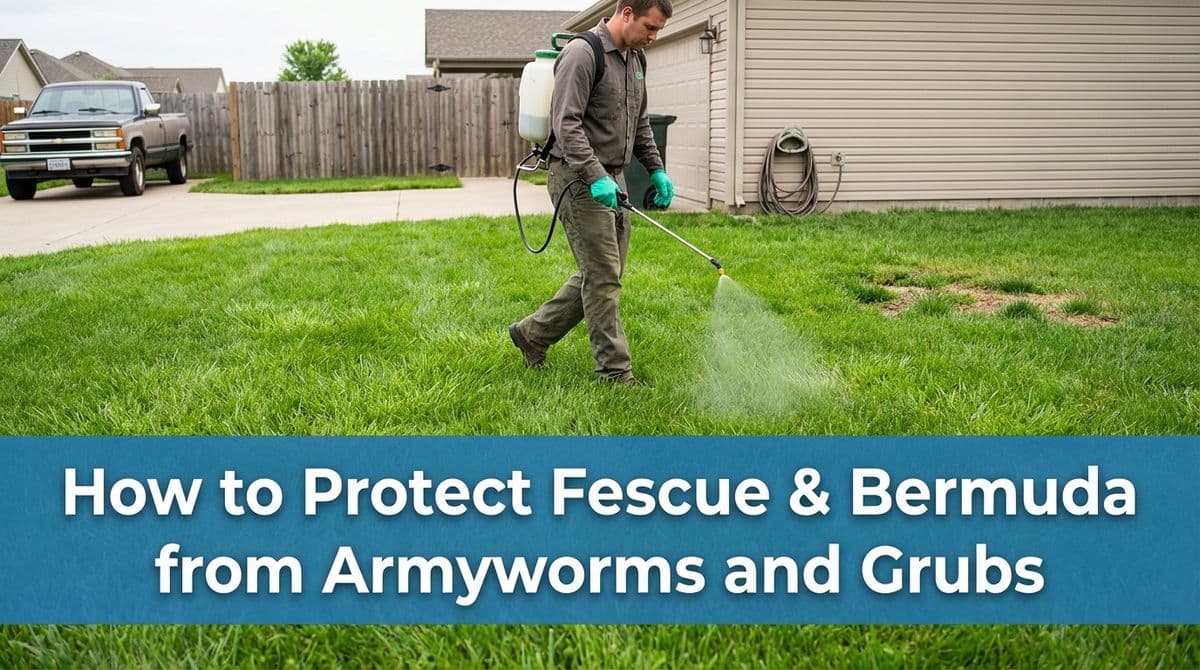
A Late-Summer Lawn Emergency Call
We recently got a call from a homeowner — let’s call him Brian — who was frustrated and a little exhausted with his lawn. His yard was mostly fescue with some Bermuda patches, and he’d just gone through a rough year: waves of armyworms, grub worries, bare spots, and reseeding after damage.
Brian told us he’d been hit by armyworms multiple times the previous season and only managed to get it sprayed twice. By the time the second wave rolled through, the damage was done — big sections of his lawn were wiped out, especially the fescue. He’d already overseeded and was seeing some recovery, but he wanted to know: “How do I keep this from happening again — and how do I help the lawn bounce back?”
That conversation is one we’ve had a lot in recent years, especially after major armyworm outbreaks. So let’s walk through how we approach protecting fescue and Bermuda lawns from armyworms and grubs, and what recovery really looks like after damage.
Armyworms vs. Grubs: What’s Attacking Your Lawn?
On the phone, we always start with a few questions, just like we did with Brian: What kind of grass do you have? When did you notice damage? Did it happen suddenly or over weeks?
Those details help us sort out whether you’re likely dealing with armyworms, grubs, or both:
- Armyworms are caterpillars (the larvae of moths). They can strip green tissue from your lawn almost overnight, especially in late summer and early fall.
- Grubs are the larvae of beetles (like June beetles). They live in the soil, feeding on grass roots and causing thinning, yellowing, and sections that peel up like carpet.
Bermuda and fescue both can be hit, but they show damage a bit differently. Bermuda sometimes recovers faster because of its spreading habit. Fescue, especially in shadier yards with lots of trees, often needs reseeding to fully fill back in after a heavy hit.
Why Preventative Treatments Matter So Much
During Brian’s call, we shared something we’ve seen play out in real time: by the time you see armyworms crawling everywhere, a lot of damage is already done. The same goes for grubs — once the grass is pulling up by the handful, you’re not just treating pests, you’re also in lawn-repair mode.
That’s why we now use a product that covers both grub prevention and armyworm prevention. After a bad regional armyworm invasion a few years ago, our owner dug into the research and found a way to get ahead of both problems in one application.
When we put it to the test during another big armyworm year, our customers who had that preventative application simply didn’t see the armyworm damage others did. The key is timing: it controls the pests when they’re very small, before they can eat enough to strip your yard.
When to Apply Preventative Controls
For our region, we typically recommend:
- Late spring to early summer for grub and early armyworm prevention.
- Follow-up monitoring through late summer and early fall, when armyworm pressure tends to spike.
The goal is to have protection in place before the big waves hit — not after you start seeing brown streaks in the lawn.
How to Spot Early Signs of Armyworms and Grubs
We walked Brian through some simple checks he could do between our visits. You can do the same at home:
Early Signs of Armyworms
- Fresh green grass turning to a straw-colored or tan patch almost overnight.
- Thin, ragged blades where it looks like the “green” has been chewed off, leaving stems.
- Small caterpillars on the surface in the early morning or evening, often greenish or brown with a noticeable stripe.
If you suspect armyworms, kneel down and part the grass. Look closely at the soil surface and crowns of the plants. You may see the small larvae before they get big enough to be obvious.
Early Signs of Grubs
- Large areas thinning out and turning unevenly yellow or brown.
- Spongy turf that feels loose when you walk on it.
- Grass that peels up easily in sections — you can roll it back and sometimes see white, C-shaped grubs in the soil.
Checking a few small test areas with a hand trowel can give you a good sense of whether grubs are present in damaging numbers.
Rescuing a Damaged Fescue and Bermuda Lawn
By the time Brian called us, he’d already reseeded and moved a fence line, so we focused on setting him up for long-term recovery. Here’s the basic approach we use when lawns have already taken a hit.
Step 1: Stop the Active Damage
If armyworms or grubs are still active, we start with a curative treatment to knock them down quickly. That stops the bleeding, so to speak, and keeps the remaining grass from being wiped out.
Step 2: Reseed or Encourage Regrowth
For fescue lawns, we almost always recommend fall overseeding after a major pest event. Fescue doesn’t spread like Bermuda; it relies on seed to fill in thin areas.
- Core aerate and overseed in the fall for fescue-heavy lawns.
- Keep seed moist with light, frequent watering until it’s established.
- For Bermuda, allow time, steady moisture, and proper fertilization so it can spread back into thin areas.
In our own fescue areas, we’ve had years where armyworms forced us to seed twice in the fall to fully repair the damage. That’s not unusual after a bad outbreak.
Step 3: Support Recovery with Fertilization
Just like Brian asked on the call, a year-round fertilization plan is a big part of recovery:
- Balanced nutrients help new seed and surviving grass develop deeper roots.
- Stronger, denser turf is naturally more resilient to future pest and weed pressure.
We tailor the program a bit depending on how much of your lawn is fescue versus Bermuda, since their timing and nutrient needs aren’t identical.
Simple Things You Can Do Between Visits
Homeowners often ask what they can do themselves to help. Here’s what we told Brian, and what we recommend to anyone dealing with armyworms or grubs:
- Water deeply, not constantly, once new seed is established — this encourages deeper roots.
- Mow at the right height for your grass type (generally higher for fescue, a bit lower for Bermuda).
- Keep an eye out in late summer and early fall for sudden color changes or chewed leaf blades.
- Call early if you suspect pests — treating at the first sign can make the difference between a quick rebound and a full renovation.
Need Help Protecting Your Lawn This Year?
If your fescue or Bermuda lawn has been through the armyworm wars — or you’re worried about a repeat of last year — you’re not alone. We’ve seen exactly what these pests can do, and we’ve also seen how much difference the right preventative and recovery plan can make.
Whether you just reseeded like Brian or you’re trying to avoid major damage in the first place, we can help you put together a season-long protection and fertilization plan tailored to your yard. That way, when the next wave of armyworms or grubs shows up, your lawn is ready — and stays green instead of going bare.