How We Manage Bermuda, Fescue & Rye to Block Weeds
We walk through how we manage Bermuda, fescue, and rye in one lawn, with the right pre-emergent timing, watering, and mowing to keep spurge, crabgrass, and Dallas grass out.
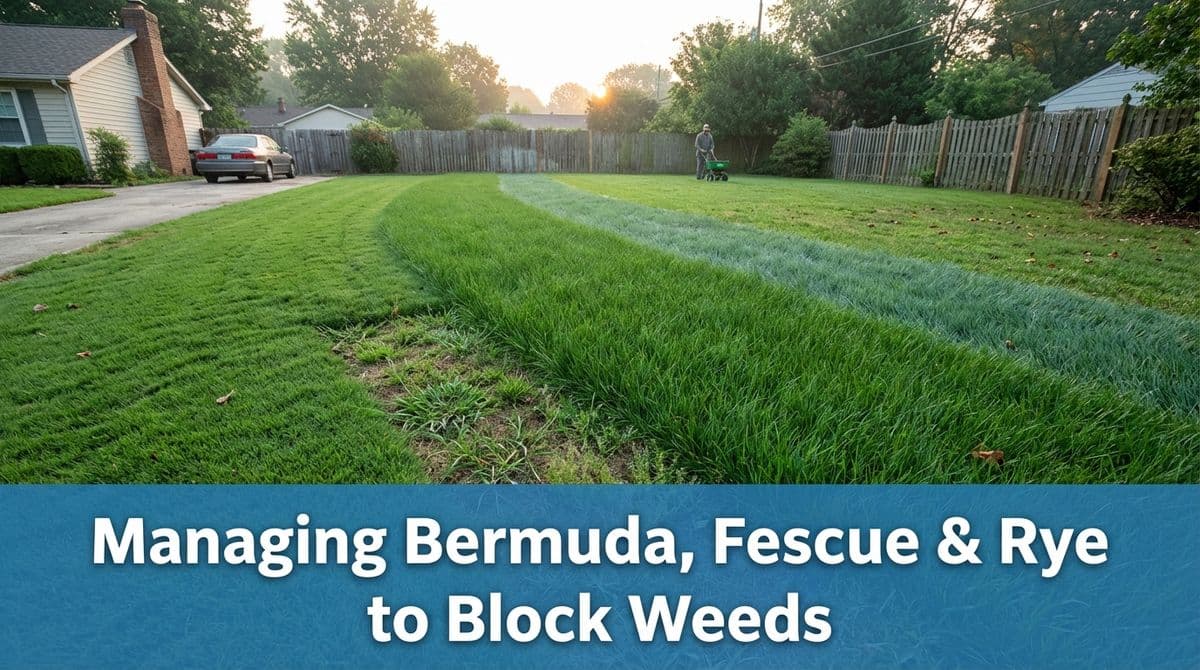
Managing Bermuda, Fescue, and Rye in One Lawn
We recently got a call from a customer — let’s call him Chris — who had a very familiar problem. Chris has Bermuda in the front yard, a mix of Bermuda and fescue in the back, and he’d overseeded everything with rye for winter color. Last year, his lawn was invaded by spurge in the front and Dallas grass and crabgrass in the back, and he was determined not to fight the same battle again this summer.
On the phone, Chris asked us some great questions about pre-emergent timing, watering, and mowing height when you’re trying to manage multiple grass types in the same yard. In this post, we’ll walk you through the same guidance we gave him and how we adjust our program for lawns like his.
How We Treat a Lawn with Bermuda, Fescue, and Rye Together
When we see a lawn like Chris’s — Bermuda in the front, Bermuda/fescue mix in the back, overseeded with rye — we treat the whole property as a cool-season–leaning mixed lawn. That’s because there’s almost always some cool-season grass (fescue or rye) present somewhere in the yard.
That choice affects how we schedule pre-emergent herbicides so we can still safely overseed in the fall. On Chris’s lawn, here’s how we structure our pre-emergent and fertilizer program:
- December: We apply a pre-emergent like Barricade that gives good weed control but breaks down in time for fall seeding later that year.
- January–February: We come back with fertilizer and treat everything as cool-season (because rye and fescue are actively growing).
- May (Round 3): We apply pre- and post-emergent again, but we stay with products like Barricade on mixed or overseeded turf, instead of a long-residual product like Specticle that can hang around up to nine months and interfere with fall overseeding.
On a pure Bermuda lawn where the homeowner doesn’t overseed, we’re comfortable using long-lasting pre-emergents. But on yards like Chris’s, we adjust our product choices so overseeding windows in September–October stay open.
Pre-Emergent and Overseeding: How We Time It
Chris was worried that if we put pre-emergent down now, it might hurt his rye. The key detail we explained is that our standard Bermuda mix for early spring includes a post-emergent component that will damage rye. So on his property, we don’t simply “treat it like Bermuda” everywhere.
Instead, we did two things:
- Confirmed his overseeding plans. We asked if he planned to seed Bermuda again in late spring. If he did, we would adjust or skip certain pre-emergent rounds.
- Kept the front and back on a cool-season-safe pre-emergent. Because rye was still visible, we use a pre-emergent program that plays nicely with his overseeding schedule.
If you’re juggling Bermuda, fescue, and rye like Chris, it’s crucial to:
- Know exactly when you plan to seed or overseed.
- Tell your lawn provider before they apply long-residual pre-emergents.
- Avoid products that stay active 6–9 months if you want to seed in fall.
Why Spurge Keeps Showing Up (Even with Treatments)
One of Chris’s biggest headaches was spurge in the front Bermuda. He had watered faithfully and still saw spurge everywhere. We explained that spurge is typically a drought-stress weed: it loves thin, stressed turf and hot soil near the surface.
When we see spurge on a lawn, we look first at water and mowing, not just chemicals. In Chris’s case, two things stood out:
- He was watering every day, 15 minutes per zone, off a well.
- He was mowing Bermuda at about ¾"–1", “golf course short,” and planning to switch to a reel mower.
Both of those choices can set the stage for spurge, even when the weather doesn’t seem that extreme.
How We Adjust Watering for Deeper Roots and Fewer Weeds
We recommended that Chris overhaul his watering schedule to encourage a deeper root system in his Bermuda and reduce stress on his turf. Here’s the approach we use and recommend to our customers:
- Water less often, more deeply. Instead of 15 minutes every day, we prefer watering 2–3 times per week but running the zones long enough to soak the soil 4–6 inches deep (often 30–45 minutes per zone, depending on your heads and soil).
- Water early in the morning. We aim for pre-dawn to mid-morning so the grass can dry out during the day and is less prone to disease.
- Watch for runoff. If water starts running off, we tell homeowners to split the run time into two shorter cycles back-to-back so more soaks in.
By making those changes, we help Bermuda roots dive deeper instead of hanging out near the hot surface, which reduces the stress that opens the door to spurge.
Mowing Height: Golf-Course Look vs. Weed Pressure
Chris keeps his Bermuda very short and is upgrading to a reel mower to keep that clean, “golf course” appearance. We told him that’s possible, but it comes with tradeoffs we manage carefully for customers who want that look.
From our experience, here’s how we handle mowing on mixed lawns:
- Bermuda: We can go shorter (¾"–1.5") if the surface is level, the mower is sharp, and irrigation is dialed in. For most homeowners, we suggest 1–2" as a more forgiving range that still looks well-manicured.
- Fescue and Rye: We prefer 3"–4". Taller blades shade the soil, help crowd out weeds like crabgrass and spurge, and protect roots from heat.
On Chris’s lawn, we advised him that keeping Bermuda ultra-short would require:
- Very consistent, deeper watering (not daily “sips”).
- Frequent mowing with a reel mower to avoid scalping.
- Accepting that a stressed, short-cut lawn can let low-growing weeds like spurge sneak in under the canopy if conditions get hot and dry.
Crabgrass and Dallas Grass: How We Keep Them Out
In Chris’s back yard, he had tilled, sprayed twice with a non-selective herbicide, and hand-pulled a lot of Dallas grass and crabgrass before we ever saw the lawn. He did the hard cleanup; our job is to help keep it from coming back.
On properties like his, we focus on:
- Consistent pre-emergent coverage. We make sure we don’t skip key spring rounds unless the homeowner is actively seeding. Missing a season can allow a new crop of crabgrass and Dallas grass to germinate.
- Targeted post-emergent follow-ups. If any crabgrass or Dallas grass slips through, we spot-treat it early while plants are small, rather than waiting until they’re mature clumps.
- Thickening the turf. We use fertilization, proper watering, and mowing height to help Bermuda and fescue fill in thin areas. Thick turf is the best long-term defense against annual weeds.
Putting It All Together for a Mixed-Grass Lawn
Managing Bermuda, fescue, and rye in the same yard is absolutely doable — we do it for customers like Chris all the time — but it takes a coordinated plan:
- Use pre-emergents that match your overseeding schedule.
- Switch from daily light watering to deep, infrequent irrigation.
- Maintain appropriate mowing heights for each grass type.
- Stay on top of crabgrass, Dallas grass, and spurge with both cultural practices and timely treatments.
If your lawn looks a lot like Chris’s and you’re tired of hand-pulling spurge or chasing crabgrass every summer, we’d be happy to look at your specific mix of grasses and customize a schedule that keeps your turf healthy — and your weeds guessing.