DIY Core Aeration: When, Why, and How We’d Do It
Thinking about DIY core aeration? Learn when to aerate, why it matters, and how to do it like a pro so your fertilizer, compost, and overseeding actually pay off.
“I’ve DIY’d Everything… Can You Just Aerate?”
We recently got a call from a homeowner — let’s call him Jake — who had been doing a great job tackling his own lawn care. He told us he’d already sprayed for weeds, put down pre-emergent, and was planning to compost, fertilize, and overseed. His last missing piece? He wanted us to come out and do a core aeration on his Bermuda lawn.
Like we explained to Jake, we only offer aeration as an additional service for our ongoing weed control and fertilizer clients. But his questions were good ones, and they’re the same questions we hear from a lot of DIY homeowners:
- When should I aerate?
- Why does my lawn even need it if I already fertilize?
- How can I do core aeration myself and still get professional-level results?
In this post, we’ll walk you through exactly how we think about aeration on our routes, and how you can plug that same approach into your DIY routine.
Why Core Aeration Matters (Even for DIY Pros)
When we walk a property for the first time, one of the first things we look for is compaction. If the soil is hard, water sits on top, or the grass roots are shallow, we know that lawn will benefit from core aeration.
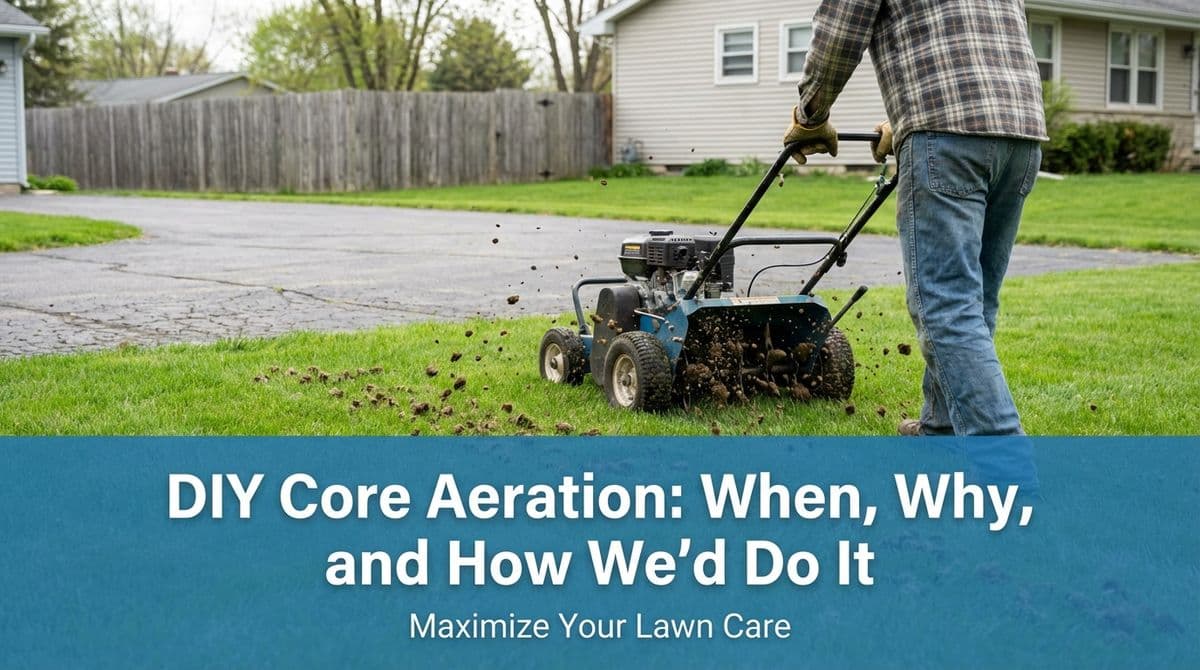
Core aeration uses a machine with hollow tines to pull out little plugs of soil (cores) from your yard. We like it because it:
- Relieves soil compaction so roots can grow deeper and stronger.
- Improves water and nutrient movement down into the root zone.
- Reduces thatch buildup by bringing microbes and oxygen to that layer.
- Creates perfect seed-to-soil contact when you overseed afterwards.
If you’re already investing time and money into fertilizer, weed control, and overseeding like Jake was, core aeration is how we’d help you get more out of every single product you apply.
When We Recommend Aeration for Different Lawns
The timing we recommend for aeration depends on your grass type and climate. When we build a program for a lawn like Jake’s, here’s the general rule we follow:
Warm-Season Lawns (like Bermuda, Zoysia, St. Augustine)
For Bermuda lawns like Jake’s, we target aeration for the active growing season:
- Best window: Late spring through mid-summer, once the lawn is fully greened up.
- Avoid: Very early spring while grass is still dormant or late fall as it’s going to sleep.
We want the grass actively growing so it can recover quickly and fill in the aeration holes.
Cool-Season Lawns (like Fescue, Bluegrass, Rye)
For cool-season lawns, we usually time aeration around:
- Primary window: Early fall (our favorite time if overseeding is planned).
- Secondary window: Early spring, if fall was missed.
If your lawn is thin, you’re planning to overseed, or the soil feels like concrete underfoot, we lean toward at least once a year for cool-season turf.
How Often We Suggest Aerating
- Typical home lawns: Every 1–2 years.
- Heavy traffic yards, kids & dogs, clay soil: Yearly aeration is usually worth it.
- Very sandy, low-traffic lawns: Every 2–3 years can be enough.
If you look at your yard and see thinning grass, standing water, or a lot of weeds despite fertilizer, that’s our cue to put aeration higher on the priority list.
How to DIY Core Aeration the Way We Do It
When we send a crew out to aerate, there’s a simple checklist we follow. You can mirror this process at home with rental equipment and get very similar results.
1. Prep the Yard First
Before we ever start the machine, we:
- Flag all obstacles: Sprinkler heads, shallow irrigation lines, landscape lighting, cable lines, and any buried utilities. We want you to do the same — it can save you an expensive repair.
- Mow the lawn shorter than usual: We typically mow to the low end of the recommended height. This lets the tines reach deeper.
- Water the day before: We like soil that’s moist, but not muddy. If the ground is rock-hard dry, water deeply 24 hours in advance.
2. Use a Core Aerator (Not Spikes)
We always use a core aerator with hollow tines that pulls out plugs. Spike shoes and spike-style aerators just push the soil sideways and can actually increase compaction. When you rent, ask specifically for a core aerator.
3. Make Multiple Passes
On most jobs, we aim for 20–40 cores per square foot. To get there, we usually:
- Make at least two passes over the lawn, at right angles if possible.
- Go a little slower on compacted areas or high-traffic paths.
Don’t worry about the plugs all over the yard — we leave them on the surface. They’ll break down on their own and help return nutrients to the soil.
After Aeration: Seed, Compost, and Fertilizer
Jake mentioned he wanted to compost, fertilize, and overseed after aeration. That’s exactly how we’d stage things for a lawn that needs thickening up.
1. Overseeding
We typically overseed right after aeration while the holes are still fresh:
- Spread seed evenly with a broadcast or drop spreader.
- Let the seed fall into the aeration holes and between the plugs — that’s ideal contact.
2. Compost Topdressing (Optional but Great)
If we’re topdressing, we’ll put down a light layer of fine compost (about 1/4 inch) and drag it in with a rake or leveling tool. This helps improve soil structure and fills in the cores with organic matter.
3. Fertilizer Timing
On our programs, we often align a fertilizer application with aeration and overseeding, but the exact product and timing depend on the season and grass type. For DIY, we generally suggest:
- Use a starter fertilizer if you’re overseeding.
- Avoid heavy, high-nitrogen doses that can push top growth too fast before roots establish.
Watering, Mowing, and What Results to Expect
Once we leave a freshly aerated and seeded lawn, we always walk the homeowner through aftercare. For your DIY project, here’s how we’d have you handle it:
Watering Schedule
- First 2 weeks: Light, frequent watering to keep the top 1/2 inch of soil consistently moist (especially if you seeded).
- Weeks 3–4: Start stretching out the time between waterings, but water deeper.
- After 4 weeks: Transition to deeper, less frequent watering to encourage deep roots.
Mowing After Aeration
- You can mow as usual after aeration if you didn’t seed.
- If you did overseed, we usually wait until new grass is about 3–4 inches tall before the first mow.
- Keep mower blades sharp to avoid tearing tender new growth.
Timeline and Realistic Results
Here’s what we tell clients to watch for after a good aeration:
- Immediate: Plugs on the lawn and visible holes in the soil.
- 2–4 weeks: Better water absorption and less runoff; early seed germination if you overseeded.
- 1–3 months: Thicker turf, deeper color, and improved drought tolerance.
Aeration isn’t a magic overnight fix, but combined with smart fertilization and weed control, it’s one of the most powerful tools we use to transform thin, tired lawns into dense, healthy turf.
Common DIY Aeration Mistakes We See (And How to Avoid Them)
When we’re called in to help after a DIY attempt, we usually see the same issues over and over. If you take nothing else from our experience, avoid these:
- Aerating at the wrong time: Doing it when grass is dormant slows recovery and invites weeds. Match it to your grass’s active growth period.
- Ground too dry or too wet: Dry soil won’t give you good cores; muddy soil just makes a mess. We aim for “moist sponge,” not “brick” or “soup.”
- Not enough passes: One quick pass usually doesn’t cut it, especially on compacted lawns. We treat it like we’re painting a wall — overlapping, thorough coverage.
- Using spike shoes: They look convenient, but they don’t give you the same results as a true core aerator.
- Skipping aftercare: Aeration is step one; seed, nutrients, and watering are what turn those holes into a better lawn.
Bringing Pro-Level Aeration Into Your DIY Routine
When Jake called, he was already on the right track — aeration, compost, and overseeding can be a powerful combo when you’ve been DIY’ing weed control and fertilizer. While we reserve our aeration services for clients on our full program, we’re always happy to share the way we approach it so you can bring that same mindset to your own yard.
If you ever decide you want us to handle the weed control, fertilizer, and aeration as a complete package, we’ll walk your lawn, build a customized plan, and take that workload off your plate. Until then, if you tackle core aeration yourself and follow the steps we’ve outlined, you’ll be using the same fundamentals we rely on every day out in the field.