Bermuda vs. Fescue: Choosing the Best Grass for Sun & Shade
Sunny front, shady back? Learn when to choose Bermuda vs. fescue, how to care for each, and how to avoid common watering and weed-control mistakes.
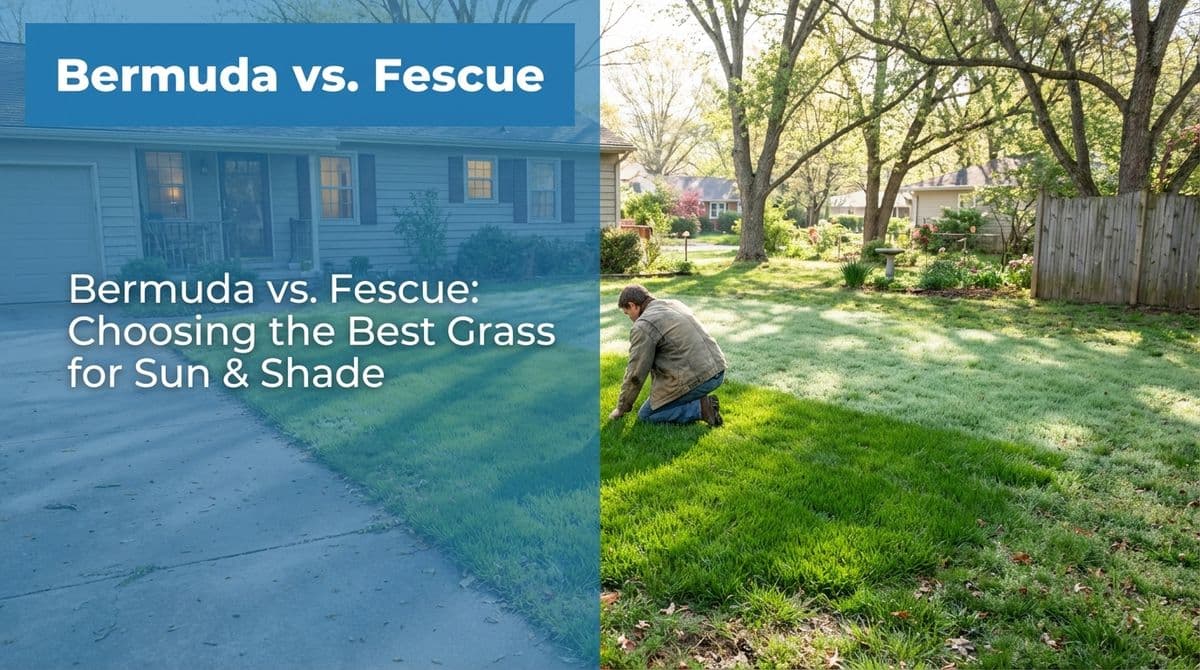
Sunny Front Yard, Shady Back Yard: Two Lawns in One
We recently got a call from a homeowner — let’s call him Mark — who had just moved into a home with a lawn that, in his words, was “in pretty bad shape.” He’d pulled a ton of weeds out of the backyard, knew the front looked different than the back, and suspected he might have a mix of Bermuda and fescue. What really had him puzzled was this:
“My front yard bakes in the sun, but the back stays pretty shady between the house, the garage, and the trees. Do I need different grass types? And how do I take care of both?”
That’s exactly the kind of situation we see all the time: a sunny front lawn that’s mostly Bermuda, and a shady backyard where fescue (or another cool-season grass) often makes more sense. Let’s walk through how we approached Mark’s yard and what we look at when recommending Bermuda vs. fescue (and a few other grasses) for sunny and shady spots.
Bermuda vs. Fescue: The Big Picture
When we pulled up the satellite view of Mark’s property, we could already guess the layout: front yard in full sun (likely Bermuda), and a backyard with large shaded areas that might have some fescue or a mix of other grasses and weeds.
Here’s how we break down the two most common lawn types we deal with in our area:
- Bermuda grass – Warm-season grass that loves full sun and heat, spreads aggressively, and goes brown/dormant in winter. Hates shade.
- Fescue (tall fescue blends) – Cool-season grass that tolerates partial shade, stays green longer into fall and winter, but can struggle in extreme summer heat if not watered and cared for properly.
In most neighborhoods around here, you’ll see Bermuda out front where the sun beats down all day, and fescue or a shade-tolerant mix in the back or along the sides of the house where trees and buildings block light.
How to Decide: Sun, Shade, and Foot Traffic
When we step onto a property like Mark’s, we’re asking a few key questions before we ever talk about seed or fertilizer:
- How many hours of direct sun does each area get in late spring and summer?
- Where is the heaviest foot traffic (kids, pets, paths to gates, etc.)?
- What’s already growing — is there a solid stand of Bermuda, patches of fescue, or mostly weeds?
As a rule of thumb:
- Choose Bermuda where you have 6+ hours of direct sun and you want a durable, warm-season lawn.
- Choose fescue (or a shade mix) where you have 3–6 hours of filtered or partial sun, especially in backyards with trees and fences.
- If you have deep, constant shade (under dense trees, between buildings), no grass will truly thrive — we often recommend mulch beds, shade plants, or stepping stones there instead of fighting a losing battle.
Caring for a Bermuda Front Yard
For Mark’s sunny front yard, our plan was to treat it as a mostly Bermuda lawn with a focus on weed control and proper fertilization. Here’s the core of what we recommend for Bermuda in our climate:
Mowing Bermuda
- Height: Keep Bermuda short — typically around 1–2 inches.
- Frequency: During the growing season, plan on once a week, sometimes more in peak summer to avoid removing more than one-third of the blade at a time.
Watering Bermuda
- Deep and infrequent: About 1 inch of water per week in summer (including rain), delivered in 1–2 deep soakings rather than daily sprinkles.
- Morning only: Water early in the morning to reduce disease pressure and evaporation.
Weed Control & Fertilizer for Bermuda
For Mark, we scheduled a pre- and post-emergent weed control application specifically targeting Bermuda lawns. That means:
- Pre-emergent: Helps prevent new crabgrass and other annual weeds from sprouting.
- Post-emergent: Knocks back existing broadleaf weeds that are already up.
Once weeds are under control, we apply a balanced fertilizer at the right time in spring and early summer to push healthy, dense growth that naturally crowds out many future weeds.
Caring for a Fescue or Shade Lawn in the Backyard
Mark’s backyard was trickier: more shade between the garage and back fence, trees overhead, and a lawn that didn’t look or feel like the fescue he remembered from his old house. This is where a quick on-site inspection really helps.
When we confirm fescue (or decide to move the yard toward fescue), we adjust the care routine:
Mowing Fescue
- Height: Keep fescue taller — usually 3–3.5 inches.
- Reason: Taller blades shade the soil, help cool the root zone in summer, and reduce weed pressure.
Watering Fescue
- Fescue prefers consistent moisture, especially during hot spells.
- Plan for about 1–1.5 inches of water per week in summer, split into 2–3 deep waterings.
- Avoid frequent, shallow watering, which encourages shallow roots and disease.
Weeds, Fertilizer, and Overseeding
On properties like Mark’s, we often:
- Spot-treat weeds in fescue areas so we don’t stress the desirable grass.
- Use a cool-season fertilizer schedule (typically heavier in fall, lighter in spring).
- Recommend overseeding in fall to thicken thin or patchy areas, especially in partial shade.
The technician leaves written notes at the door after each visit, so you know exactly what was applied, how to water, and what to expect next — something Mark appreciated since he’d just moved in and was still learning the lawn’s quirks.
Common Irrigation Mistakes to Avoid
Whether you have Bermuda, fescue, or a mix, we see the same watering mistakes over and over:
- Watering every day for 5–10 minutes: This only wets the top inch of soil and trains roots to stay shallow.
- Evening watering: Leaves grass wet overnight and increases disease risk, especially in shady fescue areas.
- Uneven coverage: Heads that are tilted, clogged, or blocked by shrubs create dry “donut” spots and soggy patches.
If you’re not sure how much water you’re actually putting down, set a few empty tuna cans or rain gauges in the yard and run your system — it’s a simple trick we walk customers like Mark through all the time.
Simple Seasonal Lawn Calendar
To help homeowners like Mark keep things straight, here’s a simplified calendar we often share for our region:
Early Spring
- Bermuda: Pre-emergent weed control, light fertilizer as it starts greening up.
- Fescue: Light fertilizer if needed, weed control with products safe for cool-season grass.
Late Spring–Summer
- Bermuda: Regular mowing, deeper watering, periodic fertilizer, spot-spraying weeds.
- Fescue: Higher mowing height, careful watering during heat, minimal fertilizer to avoid stressing the grass.
Fall
- Bermuda: Final fertilizer before dormancy, broadleaf weed control.
- Fescue: Prime time for overseeding, core aeration, and a heavier fertilizer application.
Winter
- Bermuda: Dormant and brown; maintain weed control as needed.
- Fescue: Often stays green; keep mowing as needed on dry days.
Not Sure What You Have? Get Eyes on the Lawn
Like Mark, many homeowners aren’t positive what grass they have — and that’s okay. Photos and satellite views give us a starting point, but nothing beats a quick visit to see how much sun each area really gets and what’s growing there now.
If your front yard bakes in the sun while your backyard lives in the shade, you probably need to treat them as two different lawns with two different strategies. With the right mix of Bermuda, fescue, weed control, and watering habits, you can have both looking great — without guessing every time you fire up the mower.