Annual Bermuda Grass Treatment Schedule: 7 Key Visits Explained
Wondering what seven Bermuda lawn applications actually do? Learn how each visit tackles weeds and feeds your grass for a greener, thicker yard all year.
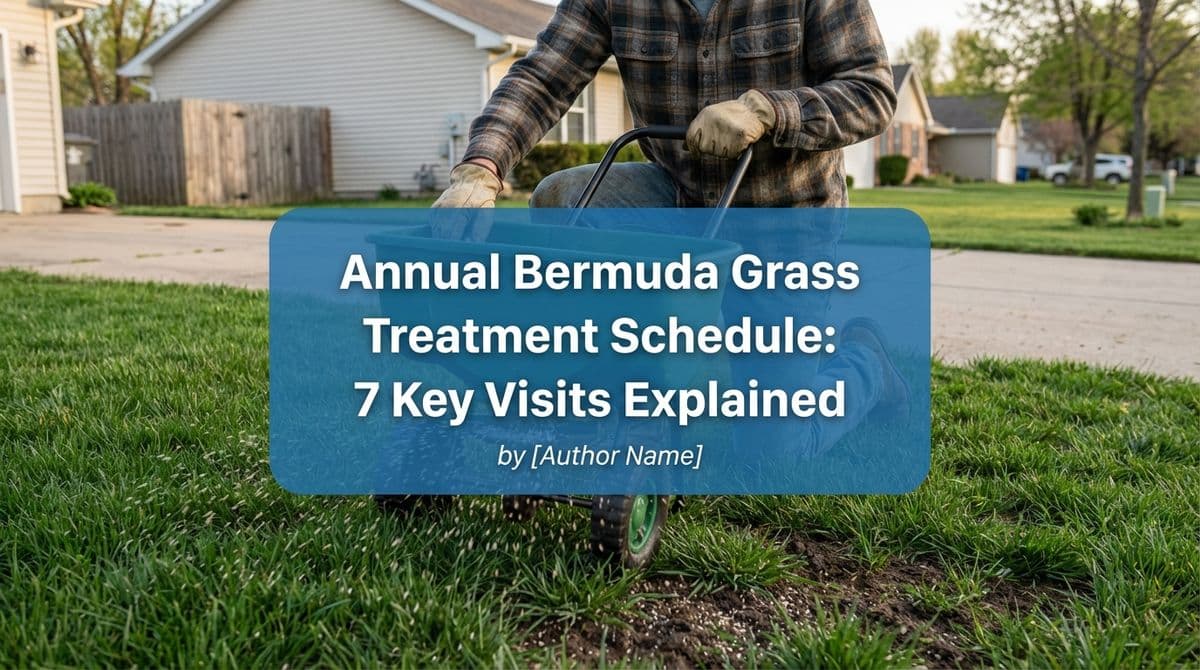
What Our 7 Bermuda Grass Applications Actually Do
We recently got a call from a homeowner — let’s call him Mark — who said, “I was calling about getting my yard sprayed. I’ve got Bermuda, and I just want it to look good. What exactly are these seven applications you guys talk about?”
That’s a question we hear a lot. When we explain that our Bermuda program is seven treatments a year — three rounds of pre- and post-emergent weed control and four rounds of granular fertilizer — homeowners usually ask, “Why so many visits?” and “What does each visit actually do?”
So in this post, I’ll walk you through an annual Bermuda lawn schedule just like the one we recommended for Mark, what happens at each visit, and what you can expect to see in your yard over the course of a year.
Why Bermuda Lawns Need Multiple Visits Per Year
Bermuda grass is tough and loves heat, but it still needs consistent, timed care to look thick, green, and mostly weed-free. One or two sprayings a year just can’t handle:
- Different weed seasons (cool-season vs. warm-season weeds)
- Fertilizer timing (feeding when Bermuda is actively growing)
- Breakdown of products (weed control and fertilizer don’t last all year)
That’s why our program for an all-Bermuda lawn is structured around seven well-timed visits instead of a single “one and done” treatment.
Visits 1–3: Pre- and Post-Emergent Weed Control
Visit 1: Late Winter – Building Your Weed Barrier
The first visit usually happens in late winter, before Bermuda really wakes up. The goal here is pre-emergent protection against weeds that would otherwise show up in spring.
What we apply:
- Pre-emergent herbicide to stop many weed seeds from germinating
- Post-emergent herbicide to knock down any existing cool-season weeds
What you’ll notice: You may not see a big transformation overnight, because a pre-emergent works below the surface. What you will notice over the next several weeks is fewer new weeds popping up compared to previous years.
Visit 2: Early Spring – Catching the Weeds That Tried Anyway
By now, soil temperatures are climbing and a whole new wave of weed seeds is trying to sprout. The first barrier has started to wear down, so we reinforce it.
What we apply:
- Another round of pre-emergent to extend your weed barrier
- Post-emergent spot treatments for any visible weeds that broke through
What you’ll notice: Weeds that are already visible start curling or yellowing over the next 1–3 weeks, while bare spots where weeds would have grown stay cleaner. Bermuda itself is just starting to green up, so don’t worry if it’s still patchy.
Visit 3: Late Spring – Cleaning Up Before the Growth Push
By late spring, Bermuda is really waking up. We use this visit to clean up remaining weeds and set the stage for strong grass growth.
What we apply:
- Targeted post-emergent on any remaining broadleaf or grassy weeds
- Sometimes a light starter fertilizer or soil amendment depending on conditions
What you’ll notice: Weed pressure should be noticeably lower than in past years. Your lawn may not look perfect yet, but you’re about to see a big jump in color and thickness as fertilizer rounds begin.
Visits 4–7: Granular Fertilizer & Ongoing Weed Control
Visit 4: Early Summer – First Major Feeding
Once Bermuda is actively growing, it’s ready for a strong feeding. This is the first of your four granular fertilizer rounds.
What we apply:
- Granular fertilizer tailored to Bermuda’s needs (balanced nutrients that release over time)
- Spot weed treatments for any visible weeds that have appeared
What you’ll notice: Over the next couple of weeks, you should see deeper green color and thicker growth, especially if you’re mowing and watering properly.
Visit 5: Mid-Summer – Keeping the Lawn Thick and Green
By mid-summer, heat-loving Bermuda is in full gear. This visit keeps nutrition steady and catches any new weed problems.
What we apply:
- Another round of granular fertilizer to maintain color and density
- Post-emergent spot spraying for any breakthrough weeds
What you’ll notice: A well-fed Bermuda lawn starts to choke out weaker weeds on its own. Regular, sharp mowing and consistent watering plus this fertilizer round is where yards really start looking like a golf fairway.
Visit 6: Late Summer – Sustaining Growth Into Early Fall
As temperatures slowly ease off, Bermuda is still actively growing, and we want to keep it healthy before it heads into dormancy.
What we apply:
- A third round of granular fertilizer (often adjusted to current weather and lawn conditions)
- Weed spot treatments as needed
What you’ll notice: Color stays stronger, longer into the season. The lawn should feel thicker underfoot, and bare spots from earlier in the year often begin to fill in.
Visit 7: Fall – Preparing Bermuda for Winter
The final visit of the year focuses on root strength and winter prep. Bermuda will eventually go dormant and turn brown, but what we do now affects how quickly it greens up next spring.
What we apply:
- A fall-formulated granular fertilizer aimed more at roots than top growth
- Spot weed control for any late-season invaders
What you’ll notice: You may not see dramatic visual changes right away, but underground, roots are strengthened. When spring rolls around, lawns that got this visit tend to green up faster and more evenly.
What We Need From You Between Visits
Even with a professional seven-visit program, your Bermuda lawn still needs good day-to-day care. Here’s what helps our treatments work their best:
- Mowing: Keep Bermuda around 1–2 inches and mow regularly, not just when it’s tall.
- Watering: Typically 1–1.5 inches per week in the growing season, applied deeply and infrequently.
- Patience with weeds: Some weeds take 2–3 weeks to fully die after treatment.
- Stay on schedule: Skipping or delaying visits weakens the weed barrier and fertilizer timing.
Thinking About Starting a Bermuda Lawn Program?
When Mark called, his yard hadn’t been treated before, and we walked him through the same seven-visit schedule we’ve just shared with you. We measured his property, confirmed he had all Bermuda, and set expectations: fewer weeds after the first couple of rounds, followed by a steady improvement in color and thickness through the fertilizer visits.
If your lawn is similar — mostly Bermuda and in need of a plan — a structured annual program with three weed control rounds and four fertilizer rounds can make a huge difference. And now you know exactly what each visit is doing for your yard.